
What is hereditary breast cancer?
Hereditary breast cancer is breast cancer that develops mainly because of an inherited change (a pathogenic variant, often called a mutation) in a gene passed down from a mother or a father. It accounts for only about 5–10% of all breast cancers; most breast cancers happen without a strong inherited cause.
Every person carries two copies of genes such as BRCA1 and BRCA2. Their normal job is to help repair damaged DNA. When one copy is faulty from birth, cells are less able to fix errors, and over a lifetime this raises the chance that a cancer develops — often at a younger age than usual, and sometimes in both breasts.
It helps to separate three ideas:
- Sporadic breast cancer — the large majority, linked to age, hormones and lifestyle rather than a single inherited gene.
- Familial clustering — several relatives affected, but no single high-risk gene found. Risk may still be raised, from shared genes of smaller effect and shared environment.
- Hereditary breast cancer — a specific inherited gene change has been identified in the family.
Carrying a gene change does not mean cancer is certain. It means the risk is higher than average, and that there are real options to find cancer early or lower the risk. For an overview of the disease itself, see our breast cancer guide.

What are the BRCA1 and BRCA2 genes and how much do they raise risk?
BRCA1 and BRCA2 are the best-known breast cancer genes; an inherited fault in either one usually raises lifetime breast cancer risk to somewhere between about 45% and 70%, compared with roughly 12–13% (about 1 in 8) for women in the general population in the UK and US.
The figures below are approximate ranges from large studies. Individual risk varies with family history, age and other factors, so a genetics team will give you a personal estimate.
| BRCA1 | BRCA2 | |
|---|---|---|
| Lifetime breast cancer risk (women) | About 60–70% | About 45–70% |
| Lifetime ovarian cancer risk | About 40–45% | About 10–20% |
| Typical breast cancer type | Often triple-negative | Often hormone receptor-positive |
| Risk of a new cancer in the other breast | Raised | Raised |
| Other cancers with raised risk | Some increase in other cancers | Prostate, pancreatic, male breast, melanoma |
“Triple-negative” means the cancer cells lack oestrogen and progesterone receptors and the HER2 protein, so hormone tablets and HER2-targeted drugs do not work against it. You can read more about these labels in breast cancer types and stages.
Knowing your BRCA status can also matter if you already have breast cancer: it may influence surgical choices and can open certain treatment options, such as PARP inhibitor medicines, which your oncology team will discuss with you.

Which other genes increase breast cancer risk?
Besides BRCA1 and BRCA2, several other genes can raise breast cancer risk, most importantly PALB2, CHEK2, ATM, TP53 and PTEN; they are usually tested together on a gene panel.
| Gene | Approximate lifetime breast cancer risk | Notes |
|---|---|---|
| PALB2 | Roughly 35–60% | Works closely with BRCA2; risk depends strongly on family history |
| CHEK2 | Roughly 20–30% | Moderate risk; management depends on family history |
| ATM | Roughly 20–30% | Moderate risk; some variants carry higher risk |
| TP53 | Very high, often at a young age | Li-Fraumeni syndrome; many other cancers; radiation is used with special caution |
| PTEN | Substantially raised; estimates vary widely | Cowden syndrome; thyroid and womb cancer risk also raised |
For moderate-risk genes such as CHEK2 and ATM, guidelines usually recommend enhanced screening rather than automatically suggesting preventive surgery. For TP53, doctors often prefer MRI and try to avoid unnecessary radiation, because carriers can be unusually sensitive to it — something that can also affect decisions about mastectomy versus breast-conserving surgery with radiotherapy.

Who should consider genetic testing for breast cancer?
Genetic testing is usually considered when your personal or family history suggests a meaningful chance of an inherited gene change, rather than for everyone.
Signs in a family history that often prompt a referral include:
- Breast cancer diagnosed at a young age, especially before 40–50.
- Several close relatives on the same side of the family with breast or ovarian cancer.
- Ovarian cancer in any close relative.
- Breast cancer in a male relative.
- Cancer in both breasts in the same person.
- Triple-negative breast cancer diagnosed at a younger age.
- Breast, ovarian, pancreatic or aggressive prostate cancers clustering in one family.
- A known BRCA or other gene change already found in a relative.
- Ashkenazi Jewish ancestry together with breast or ovarian cancer in the family.
Criteria differ between countries. In the UK, for example, the NHS generally offers testing when the estimated chance of finding a gene change is around 10% or more, or when a specific family variant is known. Many people newly diagnosed with breast cancer are now offered testing as part of their care, because the result may shape treatment.
If you are worried about your family history, your GP or family doctor is a good first step. They can take a family tree and refer you to a genetics service where appropriate.
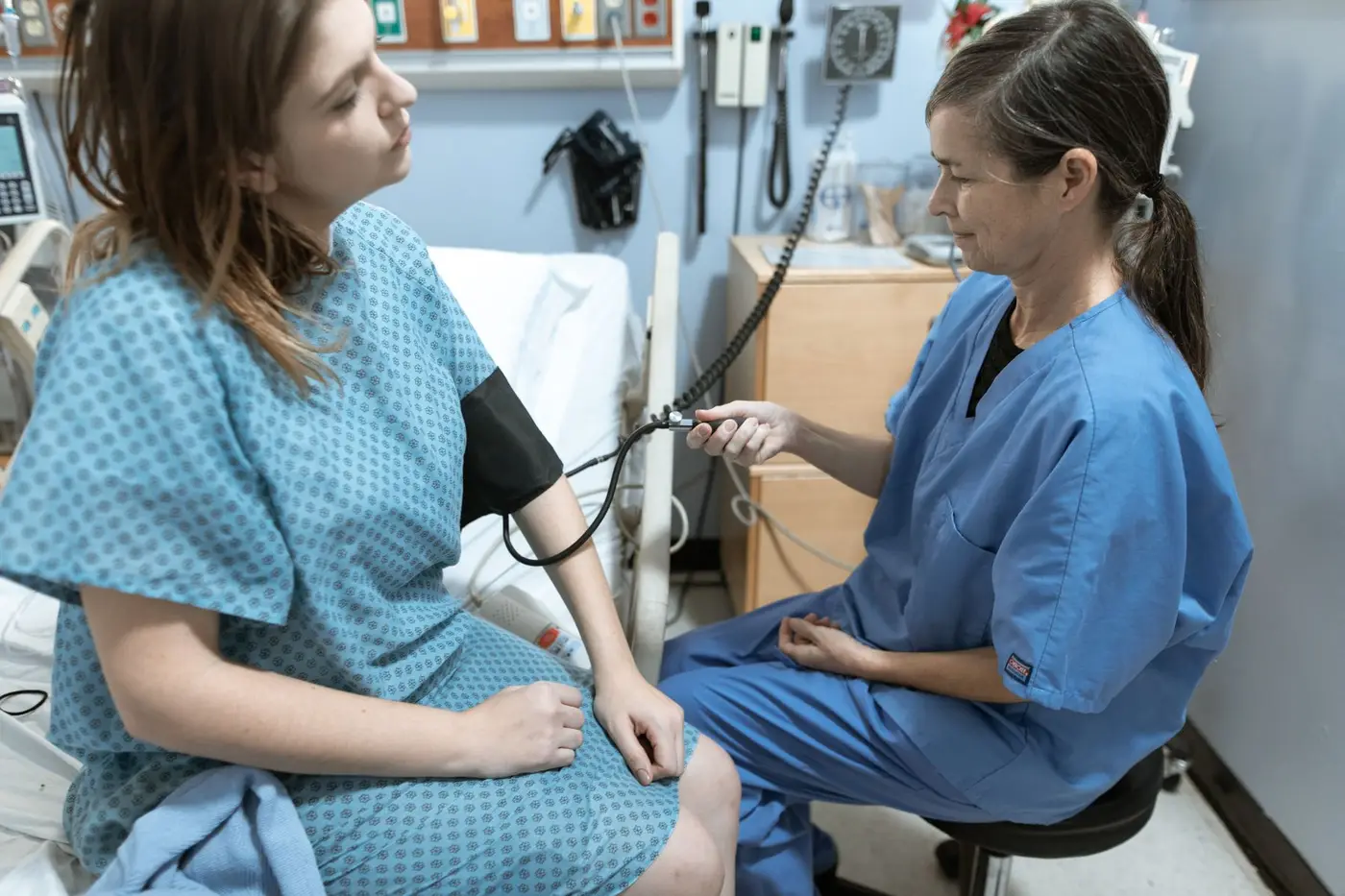
What happens in genetic counselling and testing?
Genetic counselling is a conversation with a genetics specialist or counsellor that helps you decide whether testing is right for you and what the results could mean, before any blood or saliva sample is taken.
A typical pathway looks like this:
- Family history — you draw a family tree covering at least three generations, including ages at diagnosis where known.
- Risk assessment — the team estimates your chance of carrying a gene change and your breast cancer risk.
- Pre-test discussion — what the test looks for, possible results, emotional impact, and practical issues such as insurance rules in your country.
- The test — usually a blood or saliva sample analysed for a panel of genes. Results often take a few weeks.
- Results appointment — the meaning for you and your relatives, and a plan for screening or risk reduction.
Where possible, testing usually starts with a relative who has had cancer, because a negative result in an unaffected person is easier to interpret once the family’s gene change is known. Direct-to-consumer tests can miss important variants and are not a substitute for clinical testing.
- 01Share of casesAbout 5–10%
- 02Main genesBRCA1, BRCA2, PALB2
- 03First stepGenetic counselling
- 04Key optionsScreening, medication, surgery
What does a positive, negative or VUS result mean?
A genetic test result is usually one of three types: positive (a harmful gene change was found), negative (no harmful change was found), or a variant of uncertain significance, known as a VUS.
Positive result
A pathogenic or likely pathogenic variant means your risk is raised. It is not a diagnosis of cancer. Your team will discuss screening, risk-reducing options and testing for relatives.
Negative result
If a known family variant was tested and you do not carry it, your risk is often close to that of the general population, though a strong family history may still justify extra screening. If no family variant is known, a negative result is reassuring but not a guarantee, because not every hereditary cause can yet be detected.
Variant of uncertain significance (VUS)
A VUS is a change in the gene whose effect is not yet understood. Most are later reclassified as harmless. Doctors generally do not base surgical decisions on a VUS alone; care is guided by your family history, and the laboratory may update the result over time.
Results can feel overwhelming. There is rarely a need to make decisions about surgery quickly. Take time, ask for a written summary and come back with questions.

What is enhanced breast screening for BRCA carriers?
Enhanced surveillance means more frequent and more sensitive breast imaging than routine screening, usually an annual breast MRI scan, with annual mammography added from a certain age.
For BRCA1 and BRCA2 carriers, many guidelines recommend:
- Annual breast MRI starting from around age 25–30.
- Annual mammography added from around age 30–40, depending on the guideline and country.
- Breast awareness — knowing what is normal for you and reporting changes promptly (see breast cancer symptoms).
MRI is particularly helpful in younger women, whose breast tissue is often dense and harder to read on a mammogram. The aim of surveillance is to find cancer early, when treatment is often simpler and outcomes are usually better. It does not lower the chance of cancer developing, which is the key difference from preventive surgery. MRI can also lead to extra scans or biopsies for findings that turn out to be harmless, and it helps to be prepared for that.

What are the options to lower breast cancer risk?
The main options to lower breast cancer risk for high-risk gene carriers are risk-reducing medication and risk-reducing (preventive) mastectomy, alongside healthy-lifestyle measures; each has different benefits and trade-offs.
Risk-reducing medication
Drugs such as tamoxifen, raloxifene or anastrozole can lower the risk of hormone receptor-positive breast cancer in women at increased risk. They are usually taken for five years. The evidence in BRCA carriers specifically is more limited, and they are less likely to help BRCA1 carriers, whose cancers are often hormone receptor-negative. Side effects such as menopausal symptoms need to be weighed.
Risk-reducing mastectomy
Removing healthy breast tissue lowers breast cancer risk in BRCA carriers by roughly 90% or more. It cannot remove every cell, so risk is reduced rather than eliminated. Options include skin-sparing and nipple-sparing mastectomy, and many women choose reconstruction at the same time. You can read about this approach in detail on our page on risk-reducing mastectomy and reconstruction.
Lifestyle
Keeping active, limiting alcohol and maintaining a healthy weight are sensible for everyone, though they cannot cancel out a high inherited risk.
There is no single right choice. Some women prefer surveillance for years, others choose surgery soon after testing, and many change their plans as life circumstances such as having children change.
- Hidden fold incision
- Nipple and skin preserved
- Immediate reconstruction
What can be done about ovarian cancer risk?
For BRCA carriers, the most effective way to lower ovarian cancer risk is risk-reducing salpingo-oophorectomy, an operation to remove both ovaries and fallopian tubes, usually by keyhole surgery.
Because there is no reliable screening test for ovarian cancer, this surgery is commonly recommended once a woman has completed her family. Typical timing is around 35–40 for BRCA1 carriers and around 40–45 for BRCA2 carriers, though your gynaecology and genetics teams will advise individually.
The operation causes immediate menopause in women who have not yet reached it. Hormone replacement therapy is often considered for women without a personal history of breast cancer, to ease symptoms and protect bones and heart health until the usual age of menopause. Women who have had breast cancer will need tailored advice from their oncologist. Some centres also offer removing the tubes first and the ovaries later as part of research studies.

Can men carry BRCA and how do I tell my family?
Yes — men inherit and pass on BRCA gene changes just as often as women, and each child of a carrier, son or daughter, has a 50% chance of inheriting it.
Men with a BRCA2 change have a raised risk of male breast cancer (still uncommon, but several times higher than average) and of prostate cancer, which may be more aggressive. Pancreatic cancer risk may also be raised. Male carriers are often advised to be aware of breast changes and to discuss prostate screening with their doctor.
Sharing results with relatives can be one of the hardest parts. Some practical points:
- Genetics services often provide a family letter explaining the result, which you can pass on.
- Relatives can then choose whether to be tested; no one should feel pressured.
- Children are not usually tested until adulthood, because results would not change care in childhood.
- Both sides of the family matter — a gene change can come from a father as well as a mother.

Where breast reconstruction fits in
For women who choose risk-reducing mastectomy, breast reconstruction is usually an option and can often be done at the same operation, though some women prefer to go flat or decide on reconstruction later.
Because the breasts are healthy and radiotherapy is usually not needed, preventive mastectomy often allows skin-sparing or nipple-sparing techniques, which can give a natural result. Reconstruction can use implants or your own tissue, for example a DIEP flap from the lower abdomen. The right choice depends on your body, your plans for pregnancy, your preferences and future surgery such as ovarian removal.
Dr. Fatih Kılıç is a plastic and reconstructive surgeon. Decisions about genetic testing, screening and whether preventive surgery is advisable belong with your genetics and breast teams; his role is to explain reconstruction options and plan the reconstructive side in coordination with them. Choosing no reconstruction, with or without an external prosthesis, is an equally valid decision. You can read more in our breast reconstruction overview.

Reconstruction opinions for gene carriers living abroad
If you carry a BRCA or other high-risk gene change and are considering preventive mastectomy, you can share your genetic report, imaging and your specialists’ recommendations with Dr. Fatih Kılıç for an opinion on reconstruction options. Genetic counselling, screening and the decision about risk-reducing surgery stay with your own genetics and breast teams at home; any reconstruction plan is made in coordination with them. See our page for international patients or contact us.

Frequently asked questions
What percentage of breast cancers are hereditary?
About 5–10% of breast cancers are linked to an inherited gene change such as BRCA1 or BRCA2. Most breast cancers are not caused by a single inherited gene. A family history without a known gene change can still raise risk somewhat.
What is the lifetime breast cancer risk with a BRCA1 mutation?
Large studies suggest that women with a BRCA1 gene change have a lifetime breast cancer risk of roughly 60–70%. Ovarian cancer risk is also raised, to about 40–45%. Individual risk varies, so a genetics team will give a personal estimate.
What is the lifetime breast cancer risk with a BRCA2 mutation?
Women with a BRCA2 gene change have a lifetime breast cancer risk of roughly 45–70%, and an ovarian cancer risk of about 10–20%. Breast cancers in BRCA2 carriers are often hormone receptor-positive. Personal risk depends on family history and other factors.
Should I get tested for BRCA if my mother had breast cancer?
One relative with breast cancer at an older age does not always mean testing is needed. Testing is more likely to be offered if she was diagnosed young, had ovarian or triple-negative cancer, or if several relatives are affected. Your GP or family doctor can assess your history and refer you to a genetics service.
What does a variant of uncertain significance mean?
A variant of uncertain significance, or VUS, is a gene change whose effect on cancer risk is not yet known. Most are later found to be harmless. Doctors usually base care on your family history rather than on the VUS itself.
Does a negative genetic test mean I will not get breast cancer?
No. A negative result means no harmful change was found in the genes tested, but you still have the general population risk of breast cancer. If your family history is strong, extra screening may still be advised.
How much does a preventive mastectomy reduce breast cancer risk?
In BRCA carriers, risk-reducing mastectomy lowers the chance of breast cancer by roughly 90% or more. A small amount of breast tissue may remain, so the risk is not completely removed. Breast awareness of the chest area is still advised afterwards.
At what age should BRCA carriers start breast MRI screening?
Many guidelines recommend annual breast MRI from around age 25–30 for BRCA carriers, with mammography added from around 30–40. Exact ages depend on the gene, your family history and your country’s guidelines.
Can men have BRCA mutations?
Yes. Men inherit and pass on BRCA changes as often as women. Male BRCA2 carriers have a raised risk of breast and prostate cancer and should discuss appropriate checks with their doctor.
When should BRCA carriers have their ovaries removed?
Removal of the ovaries and fallopian tubes is often recommended around 35–40 for BRCA1 carriers and around 40–45 for BRCA2 carriers, usually once a family is complete. The surgery causes early menopause, so timing and hormone replacement should be discussed with your specialists.
Can I have breast reconstruction after a preventive mastectomy?
Yes, most women who choose a risk-reducing mastectomy can have reconstruction, often at the same operation. Options include implants or your own tissue. Some women choose not to have reconstruction, which is also a valid choice.

Medically reviewed by Dr. Fatih Kılıç, Plastic, Reconstructive and Aesthetic Surgeon. This page is for general information and does not replace an individual consultation.