Congenital Breast Differences

Poland Syndrome Reconstruction

In Poland syndrome part of the chest muscle is missing on one side, and the breast and nipple are often underdeveloped. Reconstruction restores volume, the front fold of the armpit and symmetry.

What is Poland syndrome?

Poland syndrome is a congenital condition affecting one side of the body. Its features vary from mild to severe:

  1. Absence of the lower (sternocostal) part of the pectoralis major muscle
  2. An underdeveloped or absent breast, with a smaller, higher nipple
  3. A hollow below the collarbone and a missing front fold of the armpit
  4. Sometimes differences of the ribs or of the hand on the same side
Poland syndrome reconstructionOne side of the chest with an absent chest muscle and underdeveloped breast, compared with the result after staged reconstruction restoring breast volume and the front fold of the armpit. MISSING CHEST MUSCLEUNDERDEVELOPED BREAST & NIPPLE VOLUME & MUSCLE FOLD RESTOREDPoland syndromeAfter staged reconstruction
  1. Missing chest muscle
  2. Underdeveloped breast & nipple
  3. Volume & muscle fold restored
Figure 1Poland syndrome: missing chest muscle and underdeveloped breast on one side, before and after reconstruction.
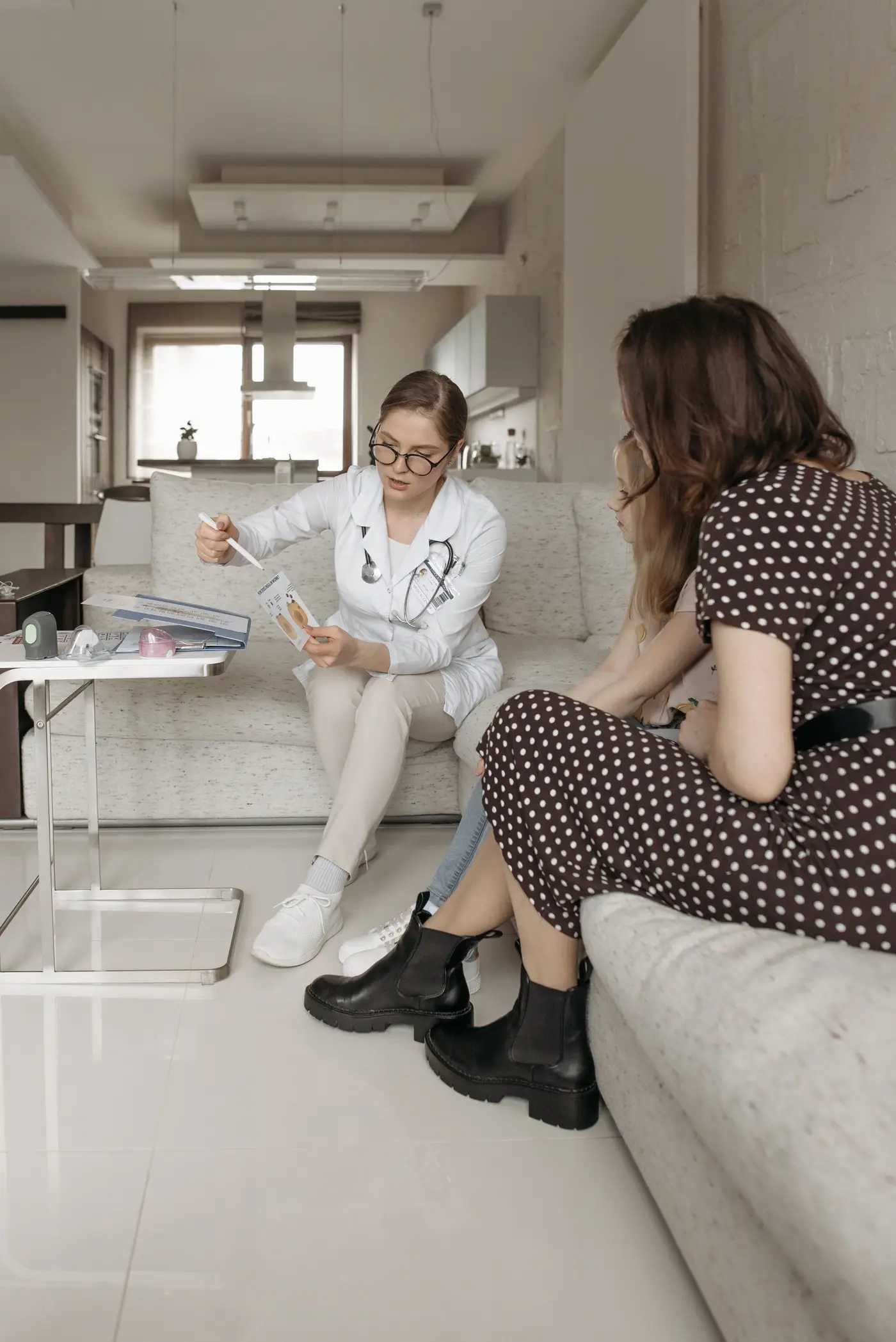
A patient and doctor talking during a consultation
Time to ask questions — your options are explained clearly and without pressure.

How reconstruction is planned

Treatment depends on how much tissue is missing. Mild cases may be corrected with an implant and fat grafting. Where the chest muscle is absent, the latissimus dorsi muscle can be transferred to recreate the front fold of the armpit and cover an implant. Staged fat grafting refines the hollow below the collarbone.

Latissimus dorsi flap reconstructionThe latissimus dorsi muscle with a skin island from the upper back is rotated beneath the armpit to the front of the chest while keeping its blood supply. Back FrontFLAP FORMS THE NEW BREAST SKIN ISLAND LATISSIMUS MUSCLE ROTATED UNDER THE ARM
  1. Flap forms the new breast
  2. Skin island
  3. Latissimus muscle
  4. Rotated under the arm
Figure 2The latissimus dorsi muscle is transferred from the back to recreate the missing chest muscle fold.

Stages and recovery

Reconstruction is often performed in two or three stages several months apart: creating volume (for example with a tissue expander), the definitive reconstruction, and refinement with fat grafting and nipple adjustment. Each stage is planned around your travel to Istanbul.

  1. 01AffectsOne side of the chest
  2. 02TechniquesImplant · LD transfer · Fat
  3. 03StagesOften 2–3
  4. 04Stay in IstanbulAbout 7–14 days per stage

Figure 3Poland syndrome reconstruction at a glance.
Two friends embracing outdoors
Many women find strength in the people who accompany them on this journey.

Poland syndrome surgery in Istanbul, Turkey

Because Poland syndrome is often corrected in stages, the whole plan — number of visits, the interval between them and the expected stay — is agreed before your first trip to Istanbul.

Fat grafting in breast reconstructionFat is harvested by gentle liposuction from the abdomen or thighs, purified and injected in small droplets in many layers to refine the breast. HARVEST BY LIPOSUCTION MICRO-DROPLETS IN MANY LAYERS PURIFIED FAT TRANSFERRED
  1. Harvest by liposuction
  2. Micro-droplets in many layers
  3. Purified fat transferred
Figure 4Staged fat grafting refines the hollow below the collarbone and the contour of the chest.

Frequently asked questions

Can men with Poland syndrome be treated?

Yes. In men, reconstruction focuses on restoring the chest contour, often with a custom implant or muscle transfer.

How many operations are needed?

Mild cases may need one operation; more pronounced cases are usually treated in two or three stages.
Dr. Fatih Kılıç

Medically reviewed by Dr. Fatih Kılıç, Plastic, Reconstructive and Aesthetic Surgeon. This page is for general information and does not replace an individual consultation.

Information & application

Considering breast reconstruction?

You do not need to decide on a surgical technique before contacting us. Share your treatment history and what you hope to achieve — your case will be assessed individually.

  • Individual review by Dr. Fatih Kılıç
  • Reply from our international patient team
  • Your details are kept confidential
Prefer WhatsApp? Message us

Request information

Ask on WhatsApp