
What are the early signs of breast cancer?
The early signs of breast cancer are usually a new lump or thickening, a change in the size or shape of the breast, skin dimpling, nipple changes or discharge, and swelling in the armpit.
Early breast cancer often causes no pain and no feeling of being unwell, which is why changes you can see or feel matter. The signs to look for include:
- A lump or area of thickened tissue in the breast or armpit that feels different from the rest.
- A change in the size, outline or shape of one breast.
- Dimpling, puckering or a pulled-in area of skin.
- Redness, a rash or skin that looks like orange peel.
- A nipple that has newly turned inwards or changed position.
- A rash, crusting or scaling on or around the nipple.
- Fluid or blood from the nipple that comes out without squeezing.
- Swelling or a lump in the armpit or around the collarbone.
- Constant pain in one part of the breast or armpit.
Many breast cancers are found on a screening mammogram before they cause any symptoms. Having one of these signs does not mean you have cancer; it means it is time to see a doctor.
Most breast lumps are not cancer, but every new lump should be checked.
What does a breast cancer lump feel like?
A breast cancer lump often feels hard, painless and irregular in shape, and it may feel fixed rather than moving freely under the skin — but cancers can also be soft, round or tender.
Because lumps vary so much, you cannot tell by touch alone whether a lump is harmless. Benign lumps such as fibroadenomas are often smooth, rubbery and mobile, and cysts may feel like a firm, fluid-filled grape. Yet some cancers feel similar.
A lump may also be felt as a thickening rather than a distinct ball, particularly with lobular breast cancer, which tends to grow in strands rather than as a single mass.
Normal breasts are naturally lumpy, especially before a period. What matters is a change that is new for you, is different from the other breast, or does not go away after your next period. If in doubt, have it checked; a doctor will examine you and, if needed, arrange imaging. You can read about the tests on our breast cancer diagnosis page.
Which skin and nipple changes can be signs of breast cancer?
Skin dimpling, puckering, redness, an orange-peel texture, a newly inverted nipple, a nipple rash and spontaneous bloody or clear nipple discharge can all be signs of breast cancer.
Skin changes
A cancer close to the skin can pull on the supporting tissue and cause a dimple or a flattened area, often most visible when you raise your arms. Swelling caused by blocked lymph vessels can make the skin thick and pitted, a change known as peau d’orange (orange peel).
Nipple changes
A nipple that has always pointed inwards is usually normal. A nipple that has recently turned in, flattened or changed direction should be checked. A persistent red, scaly or crusting rash on the nipple that does not respond to simple treatment can be a sign of Paget’s disease of the nipple, which is often linked to an underlying breast cancer.
Nipple discharge
Discharge is common and usually benign, especially when it comes from both nipples and only on squeezing. It is more worrying when it is bloody or clear, comes from one nipple and one duct, and appears on its own without squeezing. This kind of discharge should always be investigated.
Can breast cancer cause armpit swelling or breast pain?
Yes — a lump or swelling in the armpit can be a sign that breast cancer has reached the lymph nodes, while breast pain on its own is only rarely caused by cancer.
The lymph nodes in the armpit (axilla) are usually the first place breast cancer spreads to. Occasionally, an enlarged node is the first thing a person notices, even before a lump is felt in the breast. Lymph nodes also swell for many harmless reasons, such as infections, a recent vaccination or skin irritation from shaving, and this kind of swelling usually settles within two to three weeks. A node that stays enlarged, feels hard or keeps growing should be checked.
Breast pain (mastalgia) is very common and is usually linked to the hormonal cycle, both breasts, and a feeling of heaviness before a period. Pain alone is an uncommon symptom of breast cancer. However, pain that is new, is in one specific spot, does not follow your cycle, or lasts more than a few weeks deserves a medical opinion.
- Sentinel node — first node
- Axillary lymph nodes
- Tumour
- Lymph drains towards the armpit
What are the symptoms of inflammatory breast cancer?
Inflammatory breast cancer usually causes a breast that quickly becomes red, swollen, warm and heavy, often with orange-peel skin, and frequently without a distinct lump.
Inflammatory breast cancer is rare — roughly 1 to 5 in 100 breast cancers — but it tends to grow quickly, so recognising it matters. Its typical features are:
- Redness or discolouration covering a third or more of the breast.
- Swelling, warmth and a feeling of heaviness or fullness.
- Thickened, pitted skin like orange peel.
- A nipple that flattens or turns inwards.
- Changes that develop over days or a few weeks rather than months.
- Swollen lymph nodes in the armpit or above the collarbone.
These symptoms can look very like mastitis, a breast infection. A key difference is that mastitis is usually linked to breastfeeding, often comes with fever, and improves within days of antibiotics. Redness and swelling that do not clearly settle with a course of antibiotics should be referred quickly for imaging and a biopsy.
What are the symptoms of breast cancer in men?
In men, the most common symptom of breast cancer is a painless, firm lump just behind or close to the nipple.
Men have a small amount of breast tissue, so breast cancer can occur, although it is rare. Other signs include a nipple that turns inwards, nipple discharge (which may be bloody), a sore or rash on the nipple, skin dimpling and swelling in the armpit.
The most common cause of breast swelling in men is gynaecomastia: a benign, often tender, rubbery enlargement of breast tissue, frequently on both sides and linked to hormones, weight or medicines. Breast cancer, in contrast, is usually on one side, firm and off-centre.
Because men do not expect breast cancer, they often delay seeing a doctor. Men with a strong family history or an inherited BRCA2 change have a higher risk and should be particularly alert; see hereditary breast cancer and BRCA.

What else can cause a breast lump or breast changes?
Most breast lumps and changes are caused by benign (non-cancerous) conditions such as cysts, fibroadenomas, normal hormonal lumpiness or infection.
| Condition | Typical features | Usual age group |
|---|---|---|
| Breast cyst | Smooth, round, fluid-filled lump; may appear quickly and be tender; can be drained | Most common from 35 to the menopause |
| Fibroadenoma | Firm, smooth, rubbery lump that moves easily under the fingers; usually painless | Most common in women under 30 |
| Fibrocystic (lumpy) breasts | General lumpiness and tenderness that changes with the cycle, often in both breasts | Before the menopause |
| Mastitis or breast abscess | Red, hot, painful area, often with fever; usually during breastfeeding | Mainly breastfeeding women |
| Fat necrosis | Firm lump after an injury or surgery, sometimes with bruising | Any age |
| Intraductal papilloma | Small growth in a duct that may cause clear or bloody discharge | Usually 35 to 55 |
Even though these causes are common, they cannot be reliably told apart from cancer by feel alone. The usual approach is examination plus an ultrasound and/or mammogram and, where needed, a needle biopsy. A benign diagnosis often brings great relief, and many benign lumps need no treatment.

How do I check my breasts for signs of cancer?
Checking your breasts means getting to know how they normally look and feel, then looking and feeling regularly for any change — there is no single “right” technique.
Many health services now talk about breast awareness rather than a strict monthly self-examination. A simple routine:
- Choose a time. If you have periods, a few days after your period ends is easiest, when breasts are least tender. After the menopause, choose the same date each month.
- Look in the mirror. With arms by your sides, then raised above your head, then hands pressed on hips, look for changes in size, shape, outline, skin or nipples.
- Feel lying down. Using the flat pads of your middle three fingers, press gently, then more firmly, in small circles over the whole breast.
- Cover the whole area. Include the breast, up to the collarbone, into the armpit and down to the bra line, following an up-and-down or circular pattern.
- Check the nipples. Look for rashes, crusting, inward turning or discharge that appears on its own.
- Feel standing or in the shower. Soapy skin can make it easier to feel changes.
- Act on changes. If you notice anything new or different, book an appointment with your doctor rather than waiting to see if it goes.
It helps to know what is normal. One breast is often slightly larger than the other, a firm ridge of tissue along the lower curve of the breast is common, and breasts usually become softer and less dense after the menopause. Pregnancy, breastfeeding, weight change and some medicines can also change how breasts feel. The aim is not to become an expert examiner, but to notice what is new for you.
Self-checks do not replace screening mammograms, which can find cancers too small to feel.
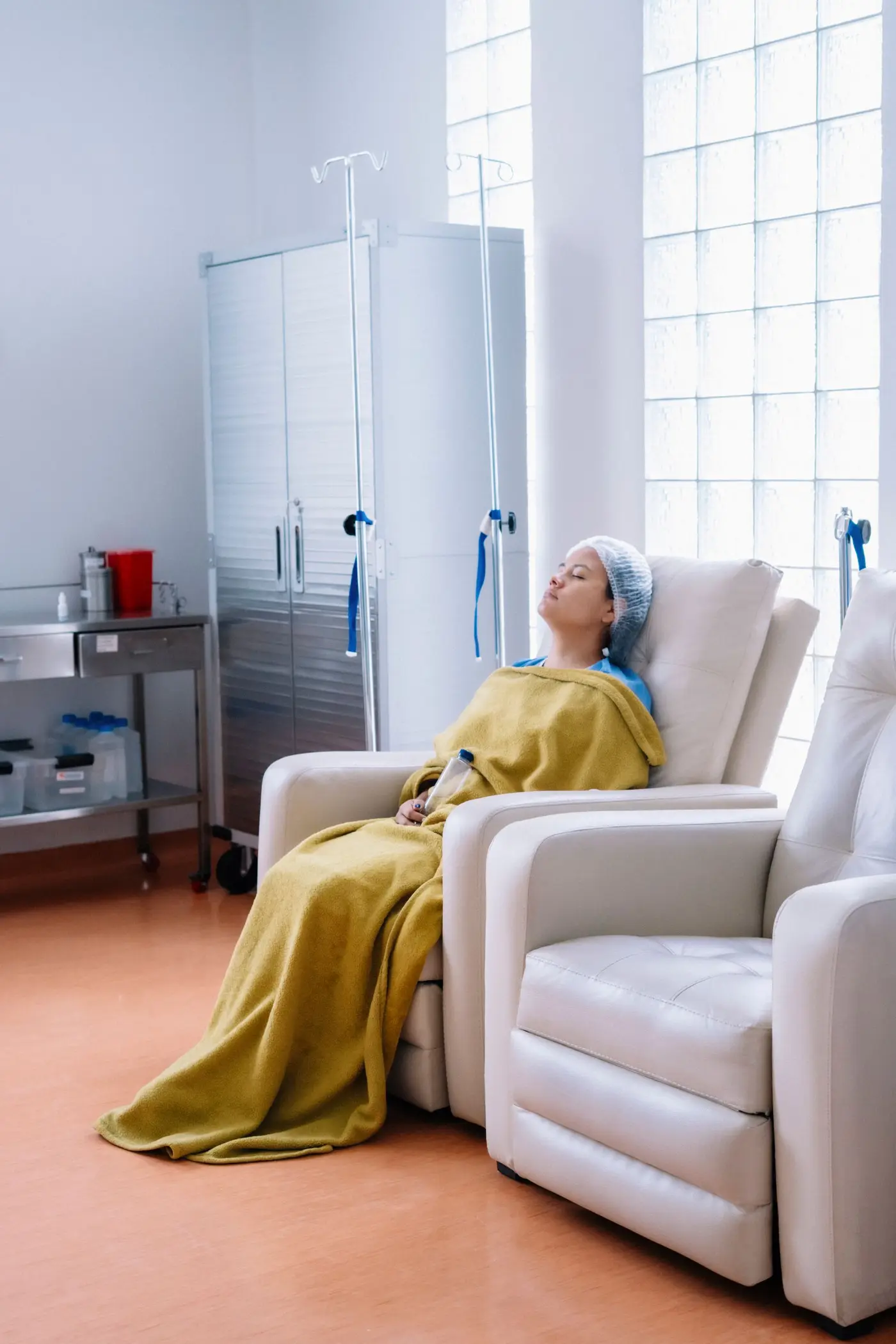
What breast cancer screening programmes are there?
Breast cancer screening uses regular mammograms to find cancer early in women without symptoms, and most countries invite women from about age 50 every two to three years.
Screening programmes differ between countries in the age range and how often women are invited. Some examples:
- United Kingdom (NHS England) — women aged 50 up to their 71st birthday are invited every 3 years; women over 71 can still ask to be screened.
- Germany — the Mammographie-Screening-Programm invites women aged 50 to 75 every 2 years.
- Other European countries — most offer screening every 2 years, usually from 45 or 50 to around 69 or 74.
The general advice is to follow your own national programme and accept your invitations. Women at higher risk — for example with a strong family history, a BRCA gene change or earlier chest radiotherapy — may be offered screening from a younger age, sometimes with yearly MRI.
Screening is not perfect. It can occasionally miss a cancer (especially in dense breasts), may lead to extra tests that turn out to be normal, and can find some slow-growing cancers that would never have caused harm. Even with normal screening results, see a doctor about any new symptom between appointments.

When should I see a doctor about breast symptoms?
See your doctor promptly — ideally within days, not weeks — about any new breast lump, armpit swelling, skin or nipple change, or unexplained discharge.
Seek an urgent appointment if you notice:
- A breast or armpit lump, especially if you are over 30.
- Rapid redness, swelling and warmth of the breast, particularly if it does not improve with antibiotics.
- Bloody or clear discharge from one nipple without squeezing.
- Skin dimpling, puckering or an orange-peel texture.
- A newly inverted nipple or a nipple rash that does not heal.
- Any breast change if you have had breast cancer before.
In the UK, a GP can refer you to a specialist breast clinic, often under an urgent referral pathway; in many other countries you can see a gynaecologist or breast specialist directly. Write down what you have noticed and when, and mention any family history.
It is natural to feel anxious. Remember that most people referred to a breast clinic do not have cancer, and if cancer is found, early detection usually means more treatment options. Our breast cancer guide explains what happens next.
Where breast reconstruction fits in
Breast reconstruction only becomes a question once a diagnosis has been made and a cancer treatment plan is in place; at the symptom stage, the priority is to get checked quickly.
If cancer is confirmed, your breast surgeon and oncology team will discuss surgery. Many women can have breast-conserving surgery, sometimes using oncoplastic surgery techniques to preserve the shape of the breast. If a mastectomy is recommended, you may be offered immediate or delayed reconstruction, or you may choose to go flat or use an external prosthesis — all of which are valid choices.
Knowing that options exist can make the early weeks less frightening. You do not need to decide anything at this stage. Our breast reconstruction page gives an overview for when you are ready.

Sharing your reports for a reconstruction opinion
If you have been diagnosed in your home country and want to understand your reconstruction options, you can share your imaging, biopsy and treatment-plan reports for an online review. Dr. Fatih Kılıç can explain which reconstruction approaches may suit you and how they might fit around your treatment, always in coordination with the oncology team treating you at home. See international patients or contact us.

Frequently asked questions
What are the first signs of breast cancer?
The first sign is usually a new lump or thickening in the breast or armpit. Other early signs include a change in breast size or shape, skin dimpling, a newly inverted nipple, a nipple rash or discharge without squeezing. Many early cancers cause no symptoms and are found by screening.
Is a breast cancer lump painful?
Breast cancer lumps are often painless, but some are tender or painful. Pain does not rule cancer in or out, so any new lump should be checked by a doctor regardless of whether it hurts.
Can a breast lump go away on its own?
Some lumps, such as hormonal lumpiness or small cysts, can change or disappear with the menstrual cycle. A lump that is still there after your next period, or any lump after the menopause, should be checked by a doctor.
How do I know if a breast lump is a cyst or cancer?
You cannot reliably tell by touch alone. An ultrasound scan can usually show whether a lump is a fluid-filled cyst or solid tissue, and solid lumps may need a needle biopsy to confirm what they are.
Is nipple discharge a sign of breast cancer?
Most nipple discharge is benign, especially if it comes from both nipples and only on squeezing. Discharge that is bloody or clear, comes from one nipple and appears on its own should be investigated by a doctor.
What does inflammatory breast cancer look like?
Inflammatory breast cancer usually makes the breast red, swollen, warm and heavy, often with thick, pitted skin like orange peel, and develops over days or weeks. There is often no distinct lump. Symptoms that look like an infection but do not improve with antibiotics should be checked urgently.
Can you have breast cancer without a lump?
Yes. Breast cancer can show as skin changes, nipple changes, discharge, armpit swelling or a change in breast shape without a lump. Some cancers are only seen on a mammogram and cause no symptoms.
At what age should I start checking my breasts?
It is sensible to become familiar with how your breasts normally look and feel from your twenties onwards and to keep checking throughout life, including after the menopause. Breast awareness is useful at every age.
At what age does breast screening start?
It depends on the country. NHS England invites women aged 50 up to their 71st birthday every 3 years, and Germany invites women aged 50 to 75 every 2 years. Women at higher risk may be offered screening earlier.
Can men get breast cancer symptoms?
Yes. Men can develop breast cancer, usually noticed as a painless, firm lump behind the nipple, sometimes with nipple changes or discharge. Most breast swelling in men is benign gynaecomastia, but any lump should be checked.
How quickly should I see a doctor about a breast lump?
Book an appointment as soon as you can, ideally within a few days. Most lumps are not cancer, but prompt assessment gives peace of mind and, if cancer is found, earlier treatment usually means more options.

Medically reviewed by Dr. Fatih Kılıç, Plastic, Reconstructive and Aesthetic Surgeon. This page is for general information and does not replace an individual consultation.